Dr. Emily Van Alst is an assistant professor in the Department of Anthropology at Washington State University. She is an archaeologist whose scholarship and community-engaged research are reshaping approaches to rock art studies and Indigenous archaeology. Her work centers on the intersection of rock art, cultural landscapes, and Indigenous knowledge systems, while foregrounding gender, ethical anthropological practice, and descendant community voices. Through her research, she advances a model for archaeology that is collaborative, accountable, and grounded in Indigenous perspectives.
Dr. Van Alst has conducted extensive community-based archaeological fieldwork in Spain, Peru, Japan, and across the United States, including Alaska, Montana, South Dakota, and Wyoming. She is currently leading three major research initiatives in North America, each emphasizing community-engaged and Indigenous-led research design. Her primary project, Inscriptions of the Elk Nation: Interpreting Rock Art through an Indigenous Lens, funded by the Wenner Gren and Washington State University Community Engaged Research (CER) Seed Grant builds on her dissertation and represents a significant methodological contribution to rock art studies. Working in collaboration with 20 members of Hehaka Oyate, Dr. Van Alst is reinterpreting rock art sites in Wyoming and South Dakota through Lakota relationships to place, animals, and ancestral imagery. This project integrates ethnohistory, cultural mapping, plant data, visiting circles, and rock art analysis, with research questions and outcomes guided by community priorities, particularly focusing on representations of elk (Cervus canadensis) within cultural and environmental landscapes.
In addition to this work, Dr. Van Alst is developing the Mackinac Bands Cultural Heritage Preservation Project in the northern Great Lakes region. This initiative centers Indigenous definitions of cultural heritage and seeks to establish a long-term archaeological research program grounded in the goals and values of the Mackinac Bands of Chippewa and Ottawa Indians.
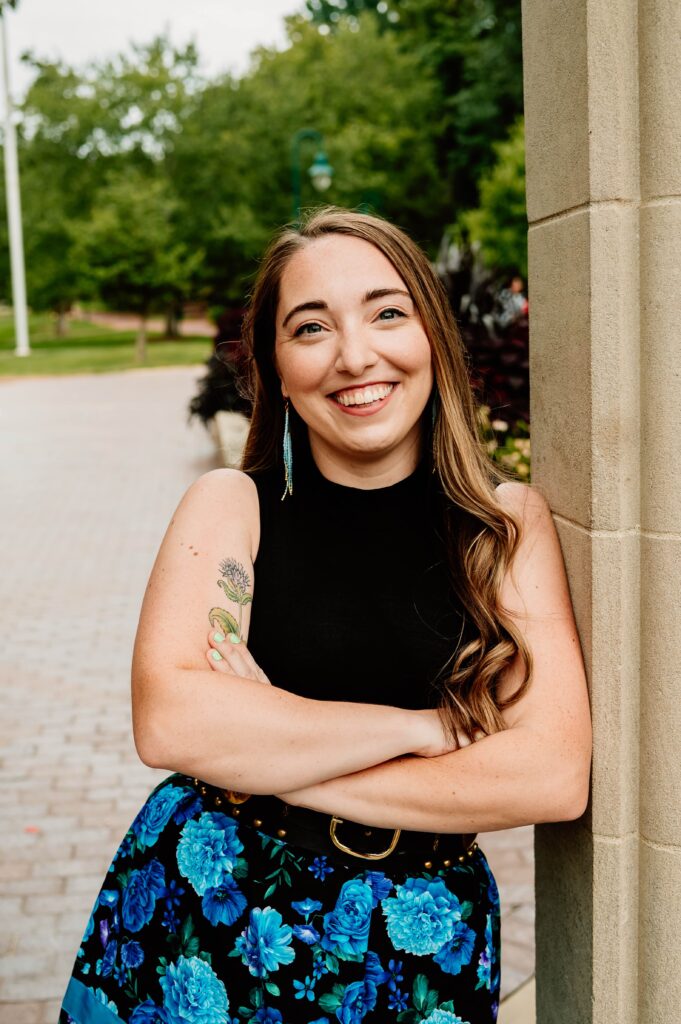
Dr. Van Alst also serves as a co-investigator on the collaborative project Gender in the Southwest, alongside Dr. Samantha Fladd which was awarded a Wenner-Gren Workshop Grant. This project brings together Indigenous women from across the Southwest to critically re-examine museum collections and develop new interpretive frameworks that center Indigenous women’s knowledge and lived experience.
Gentry is an undergraduate Lab Assistant working with Dr. Emily Van Alst. She is interested in the intersection of anthropology and archeology with social justice and queer issues, with a specific focus on how gender is perceived in rock art and how it may relate to perceptions of women and transgender people today. Within the TIKIL lab, she assists with the cataloguing of rock art images and the development of the TIKIL Digital Library. She is also working on her own research into archeological interpretations of genderqueer folks.

Madeline is a graduate student working towards her MA under Dr. Van Alst. An enrolled member of the Quapaw Nation of Oklahoma, she works with the Quapaw Historic Preservation Program to highlight cultural self determination and address the needs and desires of tribal members when it comes to protecting and preserving cultural heritage. She accomplishes these tasks through a mixture of on the ground archaeological survey and sociocultural methods including community questionnaires. Previously, Madeline has worked on community-engaged projects in Alaska, Colorado, and Peru.